AI and B2B Website Strategy: Why Building Faster Doesn’t Mean Better Result
AI is changing how websites and applications are built. Something that once required weeks of development can now be created in hours, sometimes by someone with little programming experience. For business owners, that’s appealing. Why pay a developer when you can build something yourself using AI?
I understand the excitement. At Ready Artwork, we use AI ourselves, and I believe it has tremendous potential. But after more than 20 years working in website design and digital marketing, I’ve learned something important: Building a website is only one part of making it successful. For B2B companies, a website needs to do more than look good. It needs to communicate the right message, attract qualified visitors, generate leads, and support the sales process.
This is something I discuss in my B2B Marketing in Plain English YouTube series, where I explain website and digital marketing concepts for business owners. AI can make development faster and more affordable. But that doesn’t automatically mean the final website will be more effective. And it doesn’t necessarily mean it will cost less in the long run.
Just because something is cheaper to build doesn’t mean it’s cheaper to own.
TL;DR: Key Takeaways
- AI can accelerate B2B website development, but faster execution doesn’t guarantee better marketing results.
- Experience matters. Strategy, branding, SEO, accessibility, security, and conversion optimization still require professional judgment.
- Hidden costs can include maintenance, developer dependency, lost productivity, and delayed marketing opportunities.
- Established organizations use AI to make experienced teams more productive rather than simply replacing expertise.
- For many mid-sized B2B companies, WordPress remains a practical platform because internal teams and external vendors can maintain and improve it over time.
What Is Vibe Coding, and How Does It Affect B2B Website Development?
Vibe coding refers to using AI to generate software by describing what you want in natural language instead of manually writing all the code. For example, a business owner might ask AI to build a landing page, product comparison calculator, or internal application. AI generates the code, and the user continues refining the result through additional instructions.
It’s a powerful development, especially for businesses that previously needed specialized programming resources to bring certain ideas to life. But building something that functions is different from developing a website that supports a company’s marketing strategy.
For B2B businesses, the website often plays an important role throughout a longer buying process. Customers may research products, compare suppliers, review technical information, and evaluate credibility before contacting sales. AI can help create the website, but the underlying business strategy still matters.
AI Website Development Still Requires Experience
There’s a saying I come back to often:
“You don’t know what you don’t know.”
I think this perfectly describes one of the biggest challenges with AI website development. AI can produce impressive results, but what happens when the person directing it doesn’t know which questions to ask?
An experienced developer understands architecture, security, integrations, and maintainability. An experienced designer understands branding, visual communication, and what helps users navigate a website. An experienced digital marketer understands search intent, customer behavior, lead generation, analytics, and conversion optimization.
These professionals can use AI to work faster because they already know what they’re trying to accomplish. They also know how to recognize problems that someone without that experience might overlook.
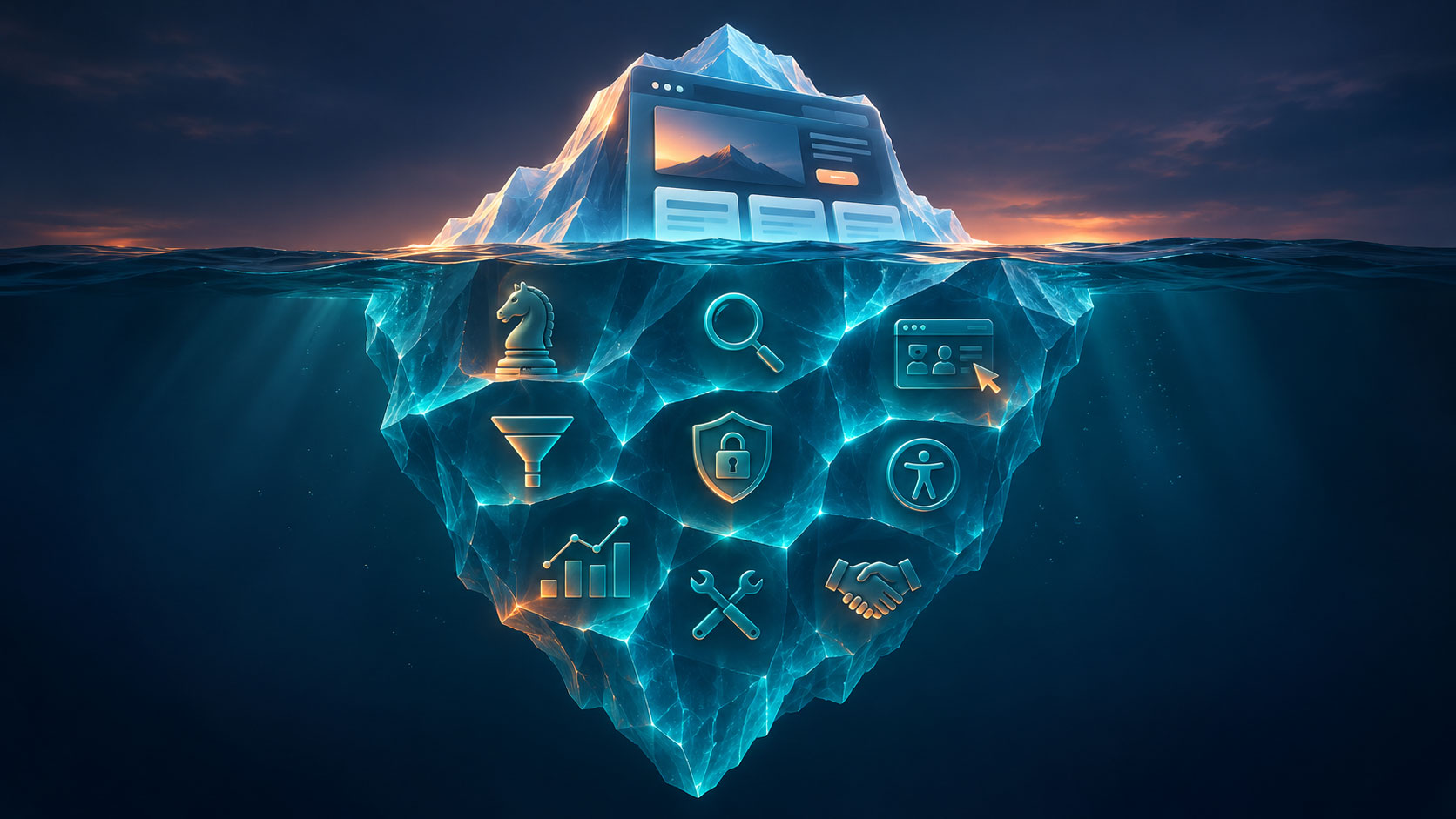
Consider a B2B website that looks professional and functions correctly. That doesn’t necessarily mean it has a strong foundation in the following areas.
- Strategy: Does the website support the company’s business goals? Does it address the needs of actual buyers? Is there a clear path from discovering the company to contacting sales?
- Branding and Design: Does the website communicate what makes the company different? Does it build trust with the intended audience?
- SEO and Search Visibility: Can potential customers find the website? Is the content organized around relevant search intent? Are important technical SEO fundamentals addressed?
- Conversion Optimization: Are visitors guided toward meaningful next steps? Are forms, calls to action, and landing pages designed around qualified lead generation?
- Accessibility and Compliance: Has the website been reviewed for applicable accessibility, privacy, and other compliance requirements?
- Security and Long-Term Support: Has the underlying technology been properly tested? Can another developer maintain it? Are updates and ongoing security responsibilities clearly assigned?
AI can help with all of these areas. But it doesn’t remove the need for someone who understands how to evaluate the results.
A website that works isn’t necessarily a website that works for your business.
The Hidden Costs of AI Website Development
When comparing website development options, businesses naturally focus on the initial price. But the real cost of ownership goes beyond getting the website launched. Someone still needs to maintain, secure, troubleshoot, and improve it.
- Maintenance and Security: AI-generated websites still require testing, software updates, backups, access management, and ongoing monitoring. Generating code quickly doesn’t automatically make it secure or maintainable.
- Documentation and Developer Dependency: If one person builds a custom website or application using AI, can anyone else understand how it works? Without documentation, another developer may need additional time to understand the system before making changes.
- Future Development: What happens when the company needs new integrations, additional features, or more complex workflows? A solution that works well today may require additional development as business requirements change.
- Potential Rebuilding Costs: If a system becomes difficult to maintain or extend, the company could eventually spend more troubleshooting or replacing it than it originally saved. None of these risks are exclusive to AI. Traditional development projects can suffer from the same problems. But AI makes it easier to build things quickly, sometimes before anyone has fully considered what ongoing ownership will involve.
The Opportunity Cost: When a Quick Project Takes Weeks
Here’s something we’ve experienced firsthand at Ready Artwork. We’ll recommend developing a landing page or simple calculator to support a client’s digital advertising campaign. Sometimes the business owner decides to build it themselves using AI. The thinking is understandable: save on development expenses and get the project completed quickly.
And sometimes that works. But we’ve also seen projects that were expected to take a few days stretch into several weeks. When a project stretches out, the campaign launch gets delayed along with the leads, sales opportunities, and performance data it could have generated.
The biggest cost isn’t necessarily the development work itself. It’s the marketing opportunities the business misses during the delay.
Those weeks could have been spent:
- Generating qualified leads and potential sales
- Collecting conversion and customer behavior data
- Testing advertising messages
- Improving landing page conversion rates
- Identifying which campaigns deliver the strongest results
Instead, that learning and optimization process starts weeks later. There’s also the business owner’s time to consider. Every hour spent troubleshooting an application is time that could be spent managing customers, developing business relationships, or growing the company.
A project might save money on development but lose valuable time and marketing opportunities. AI can make coding faster without necessarily making the entire project faster. For B2B businesses investing in digital marketing, that distinction can have a direct impact on campaign performance.
What Happens When the Original Developer Leaves?
We recently spoke with a company that had invested several months developing an AI-powered website and internal business processes. Most of the development was handled by one employee. When that employee was no longer with the company, management needed to evaluate what had been built and how those systems could continue being supported.
What documentation existed? Who understood the applications? Could another developer take over? What would ongoing maintenance involve? This doesn’t mean the technology failed or that the company needs to rebuild the systems. But it illustrates an important business risk.
If only one person understands how a critical business system works, the company becomes dependent on that individual.
This isn’t a new challenge. Businesses have faced developer dependency long before AI. However, as AI makes it possible for individuals to build increasingly complex systems, documentation, ownership, and long-term support become even more important.
How Established Organizations Are Using AI Differently
One thing I’ve observed while working with larger organizations is that AI adoption isn’t necessarily about cutting expenses immediately. Many companies are investing in AI tools, training, experienced developers, and established development processes to improve long-term productivity. They still rely on professional expertise.
Developers review code. Designers evaluate user experience. Marketing teams guide strategy. Security and quality-control processes remain important. AI helps these teams execute faster, but experienced people are still responsible for evaluating the work.
There’s a meaningful difference between using AI to replace expertise and using AI to make experienced professionals more productive. For business-critical websites and applications, I believe the second approach is generally more sustainable.
Why WordPress Still Makes Sense for Many B2B Businesses
With so many AI website builders available, why does Ready Artwork continue recommending WordPress? It comes down to what our clients actually need. Many are mid-sized B2B companies with small marketing teams. They need websites that support SEO, lead generation, and ongoing marketing campaigns. They also need the flexibility to update and improve the website without relying on the original developer for every change. WordPress continues to offer practical advantages.
- Multiple Teams and Vendors Can Support the Website: WordPress has a large developer community and established tools. Internal marketing teams can update content. Ready Artwork can support SEO and marketing improvements. Outside developers and security providers can assist when necessary. The company has more choices when employees or agencies change.
- It’s Built Around Content and Marketing: B2B websites need ongoing updates, including new articles, product information, landing pages, and campaign content. WordPress provides familiar content-management workflows and mature integrations for SEO, analytics, and digital marketing. When properly implemented, many routine changes can be made without custom development.
- It Offers Long-Term Flexibility: As an open-source platform, WordPress provides businesses with options for hosting, development partners, and future improvements. Of course, WordPress isn’t automatically problem-free. Poor development practices, plugin conflicts, and neglected maintenance can create issues. But a properly developed and maintained WordPress website offers a foundation that multiple teams can understand and support.
- WordPress Is Adopting AI, Too: Choosing WordPress doesn’t mean giving up AI. The WordPress ecosystem continues developing AI capabilities and integrations, allowing businesses to use AI within an established website platform. This is why we don’t approach the decision as AI versus WordPress. The better question is which technology supports the company’s marketing needs, internal capabilities, and long-term growth. WordPress isn’t the right choice for every custom application. But for many mid-sized B2B marketing websites, it remains a practical balance of flexibility, maintainability, and ongoing support.
Four Questions to Ask Before Building a B2B Website With AI
Before investing in an AI-built website or application, consider four questions.
- If the Original Developer Leaves Tomorrow, Can Someone Else Maintain It? Does the company have access to the code, accounts, documentation, and technical information needed for someone else to take over?
- Who Is Responsible for Security and Maintenance? Who handles updates, backups, troubleshooting, testing, and future improvements? Have those costs been included in the budget?
- Will the Website Continue Supporting the Business as It Grows? Can it accommodate new marketing campaigns, integrations, content, and changing business needs?
- What business opportunities could be lost if the project takes longer than expected? Consider delayed campaigns, missed leads, lost staff time, and weeks of conversion optimization that could already have been underway.
The Bottom Line: Better B2B Website Strategy Matters More Than Faster Development
I’m a big believer in AI. It’s already changing how we work, and I believe it will continue improving productivity across website development and digital marketing.
But technology doesn’t eliminate the importance of experience. The strategy behind a website, the expertise of the people directing the work, and the ability to maintain and improve it over time still matter.
A B2B website shouldn’t simply look good or function correctly. It should attract the right audience, generate qualified leads, support the sales process, and continue creating business value. That’s the perspective I try to share in my B2B Marketing in Plain English YouTube series, and it’s how we approach website projects at Ready Artwork.
Just because something is cheaper to build doesn’t mean it’s cheaper to own.
Before you build with AI—or anyone else—know what you’re building. Our 7-Step Website Blueprint helps businesses evaluate their audience, goals, content, functionality, and marketing needs before choosing how to build. Whether that involves AI, WordPress, or another technology, the goal is the same: develop a website that supports the business today and continues performing well into the future.
Ready Artwork’s 7-Step Website Blueprint
Frequently Asked Questions
- Can AI build an effective B2B website?
- Yes, AI can speed up development, but an effective B2B website still depends on strategy, user experience, SEO, conversion optimization, and professional oversight.
- What are the hidden costs of AI website development?
- Potential costs include ongoing maintenance, security, documentation, troubleshooting, developer dependency, and delayed business opportunities.
- Does AI-generated website code affect SEO?
- AI-generated code isn’t inherently bad for SEO. Search performance depends on factors including crawlability, technical implementation, content quality, site structure, and how well the website satisfies user needs.
- Is WordPress better than an AI website builder for B2B?
- It depends on the business’s requirements. WordPress often offers advantages in content management, established integrations, developer availability, and flexibility. An AI website builder may be appropriate for simpler projects or specific workflows.
- Should B2B businesses use vibe coding?
- Vibe coding can be useful for prototyping, experimentation, and appropriate production applications. For business-critical systems, professional review, testing, documentation, security, and ongoing support remain important.