What Is the 95-5 Rule for B2B Marketing and Why It Matters
Traditional B2B marketing has long focused on short-term lead generation aimed almost exclusively at prospects who are ready to buy immediately. This approach prioritizes performance channels such as search ads, gated content, and aggressive sales outreach, often at the expense of long-term brand building.
This article explains the 95-5 Rule for B2B marketing, a research-backed framework that shows why most future growth depends on engaging buyers long before they enter the market. The rule reframes how demand is created and captured, highlighting why balancing brand investment with activation is essential for sustainable B2B growth and why over-focusing on the immediate pipeline can quietly restrict future revenue.
Key Takeaways:
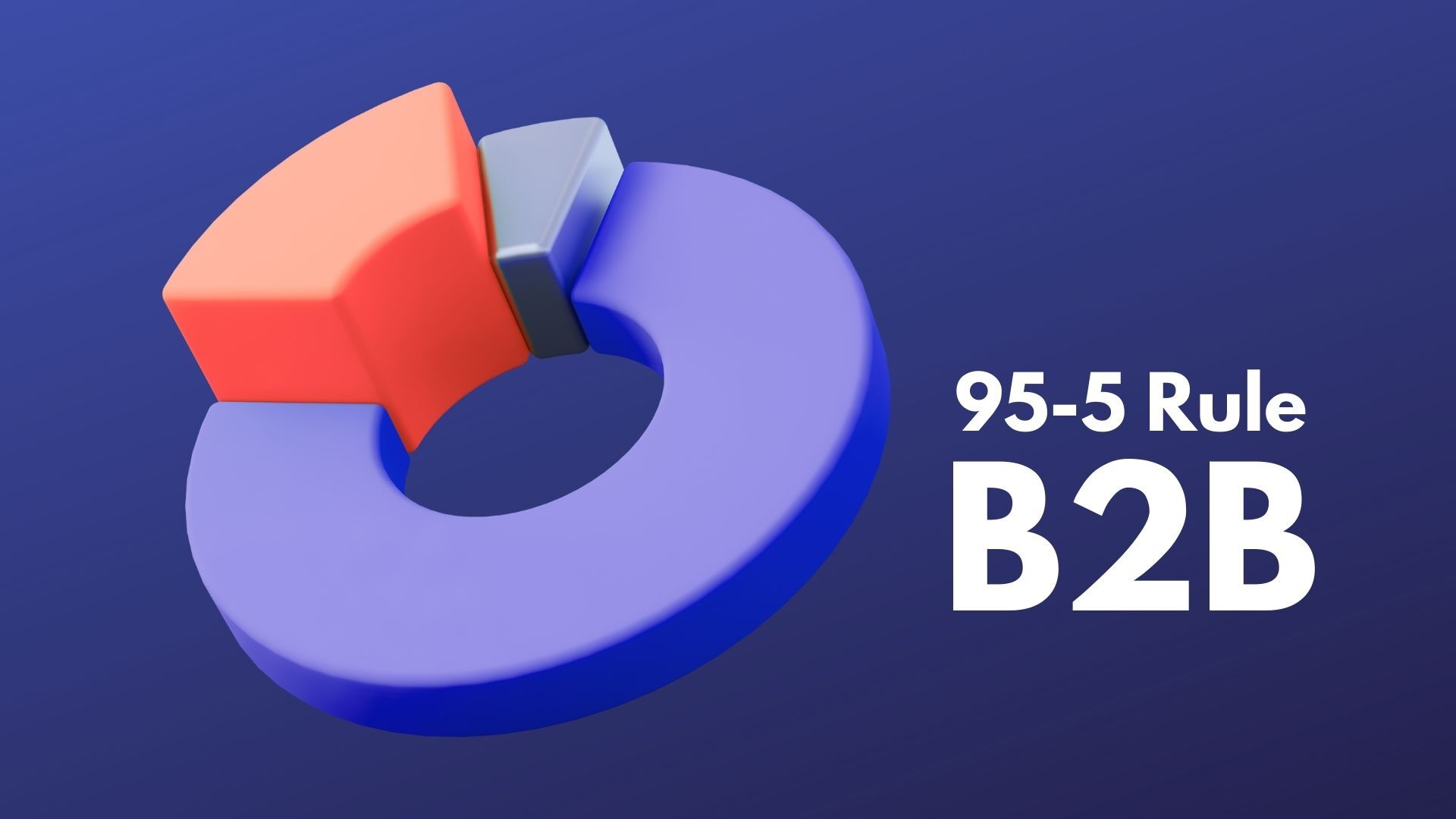
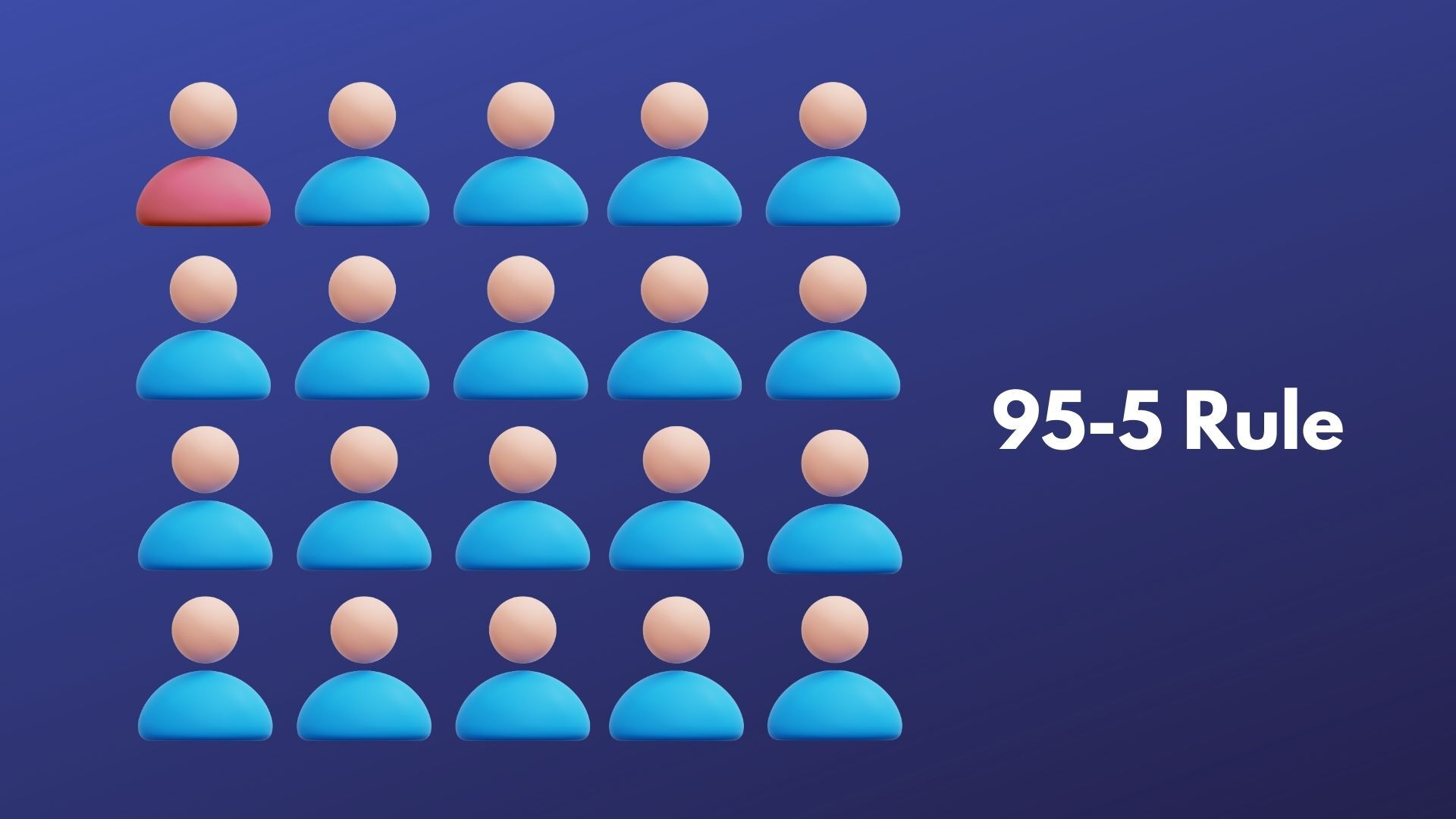
The 95-5 Rule states that at any given time, only about 5 percent of potential B2B buyers in a category are actively in the market to purchase. The remaining 95 percent are out of market, meaning they are not currently researching solutions or planning a buying decision, even though they may do so later.
The concept originates from research by Professor John Dawes of the Ehrenberg Bass Institute and has been widely shared by the LinkedIn B2B Institute. It reflects a consistent pattern in B2B buying behavior rather than a temporary market condition.
Why Most B2B Buyers Are Out of Market
B2B purchases occur infrequently compared to consumer buying. Organizations often operate under long-term contracts, fixed budgets, and complex approval processes, which limit how often they reassess suppliers or solutions.
Even ideal prospects may not be considering your offering because it is not a current priority. They may already have a vendor, be constrained by contracts, or be focused on other challenges. As a result, most of the addressable market is unavailable to convert in the short term.
Demand Capture vs Demand Creation
Demand capture refers to marketing activities designed to convert buyers who are already in the market. These efforts focus on high-intent signals and include paid search, product-focused SEO, comparison content, retargeting, and sales enablement assets.
Demand creation targets buyers who are not ready to purchase. Its purpose is to build awareness, educate the market, and create mental availability so that your brand is remembered when a buying situation eventually arises. Brand campaigns, thought leadership, and category education play a central role in this process.
What the 95-5 Rule Means for B2B Strategy
A strategy focused only on in-market buyers naturally hits a ceiling. The audience is small, competition is intense, and costs rise as more brands pursue the same limited demand. This often leads to diminishing returns and unstable pipeline performance.
Investing in the 95 percent expands future opportunity. By building familiarity and trust early, brands increase the likelihood of being shortlisted when buyers enter the market. This improves conversion efficiency, deal velocity, and pricing power.
Relationship to the 60:40 Brand vs Activation Rule
The 95-5 Rule aligns closely with research by Les Binet and Peter Field, who found that long-term growth is driven by a balance between brand building and activation. Their work suggests an average split of around 60 percent brand and 40 percent activation, with B2B data often closer to an even balance.
The 95-5 Rule helps explain why this balance works. Brand activity primarily influences out-of-market buyers, while activation focuses on those who are ready to act.
How to Apply the 95-5 Rule in a B2B Marketing Mix
Applying the 95-5 Rule does not mean abandoning demand generation. It requires rebalancing budgets and expectations. Many B2B organizations benefit from allocating a meaningful share of spend to brand-focused channels such as LinkedIn reach campaigns, category education, and creative storytelling.
At the same time, demand capture programs should remain efficient and visible. When buyers are in the market, they should encounter clear value propositions, credible proof points, and simple conversion paths.
Messaging and Creative for Different Buyer States
Out-of-market buyers respond best to simple and memorable messaging that clearly communicates who you are and what problem you solve. At this stage, clarity and repetition matter more than detailed feature explanations.
In the market, buyers need reassurance and evidence. Messaging should focus on differentiation, case studies, demonstrations, pricing transparency, and risk reduction. Aligning creative with buyer readiness improves performance across the funnel.
Channels That Work Best for Each Group
Demand capture channels include search advertising, comparison platforms, bottom funnel SEO content, remarketing, and direct sales outreach. These channels are effective at reaching buyers who are actively researching solutions.
Demand creation is better supported by broad reach channels such as LinkedIn brand campaigns, podcasts, webinars, sponsorships, and educational content that frames the category. These channels prioritize reach over immediate conversion.
Measuring Success Over Time
Short-term metrics such as leads, pipeline value, and conversion rates are appropriate for demand capture efforts. They help optimize efficiency among active buyers. Demand creation should be evaluated using longer-term indicators such as reach, share of voice, branded search growth, category association, and revenue trends over time. These metrics reflect future demand rather than immediate response.
Common Misconceptions About the 95-5 Rule
A common misconception is that the rule suggests ignoring buyers who are ready to purchase. In reality, it promotes balance rather than exclusion. Another mistake is treating the rule as a fixed budget formula instead of a strategic lens that should adapt to deal size, category maturity, and sales cycle length.
Conclusion
The 95-5 Rule reframes B2B marketing around a simple truth: most future buyers are not ready to buy today. Recognizing this allows marketers to justify sustained brand investment while still capturing active demand efficiently.
By consistently engaging the 95 percent, brands position themselves as the obvious choice when buyers eventually enter the market. Over time, this balance between demand creation and demand capture supports more resilient and predictable growth.